
Respire 2
Background
The original Respire laid the conceptual and technical groundwork for Respire 2 by establishing breath as a meaningful mode of interaction within virtual reality. Using a respiration sensor, an HTC Vive headset, and an intelligent musical agent, Respire demonstrated that breathing could drive changes in both virtual landscapes and sound, guiding users through affectively varied environments rooted in mindfulness principles. Respire 2 builds directly on this foundation but deepens the experience: rather than navigating through external abstracted worlds (oceans, architectures), it situates the participant inside a lung-like interior, shifting the metaphor from observing breath-responsive environments to inhabiting the body itself. It also expands the interaction vocabulary beyond respiration alone by introducing gestural hand movements for spatial navigation, and reconceives the sound layer not as agent-generated music but as a co-breathing acoustic presence—moving the work from a guided, narrative-driven journey toward a more open, reflective, and embodied encounter with breath.
System Design
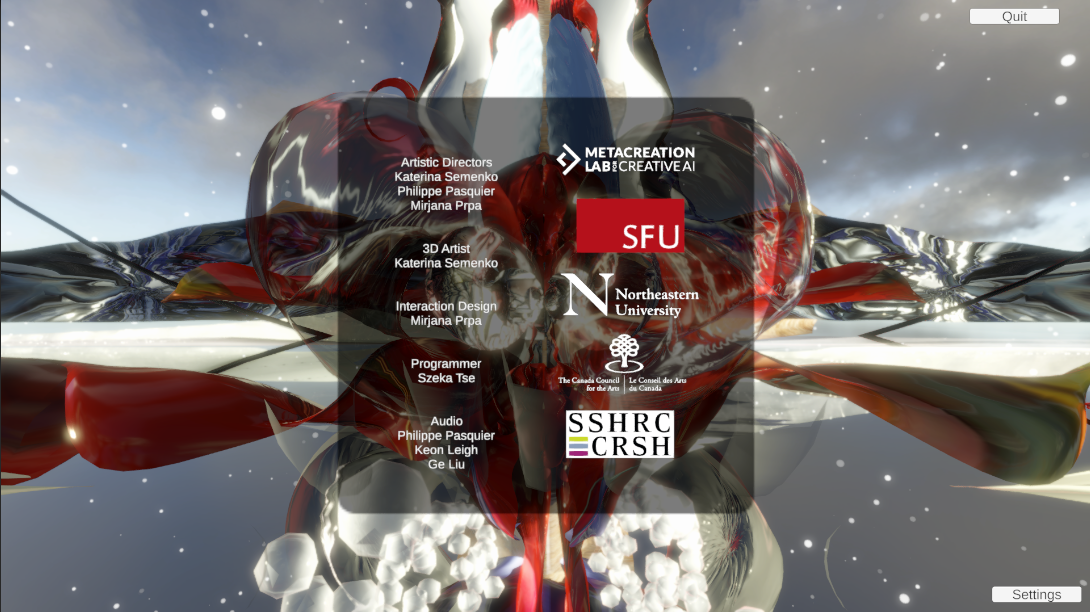
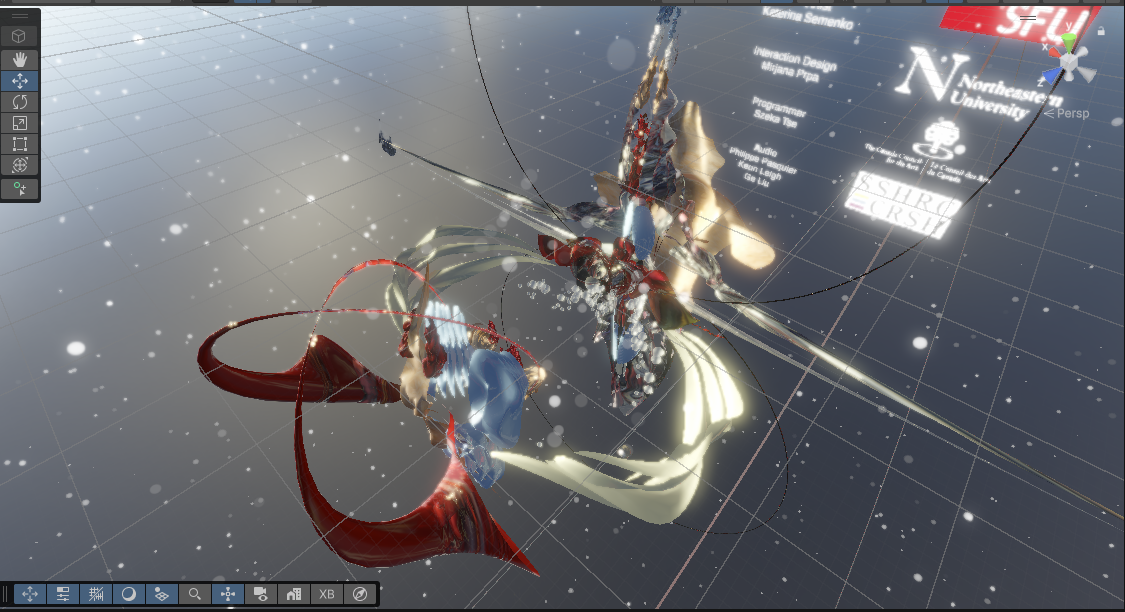
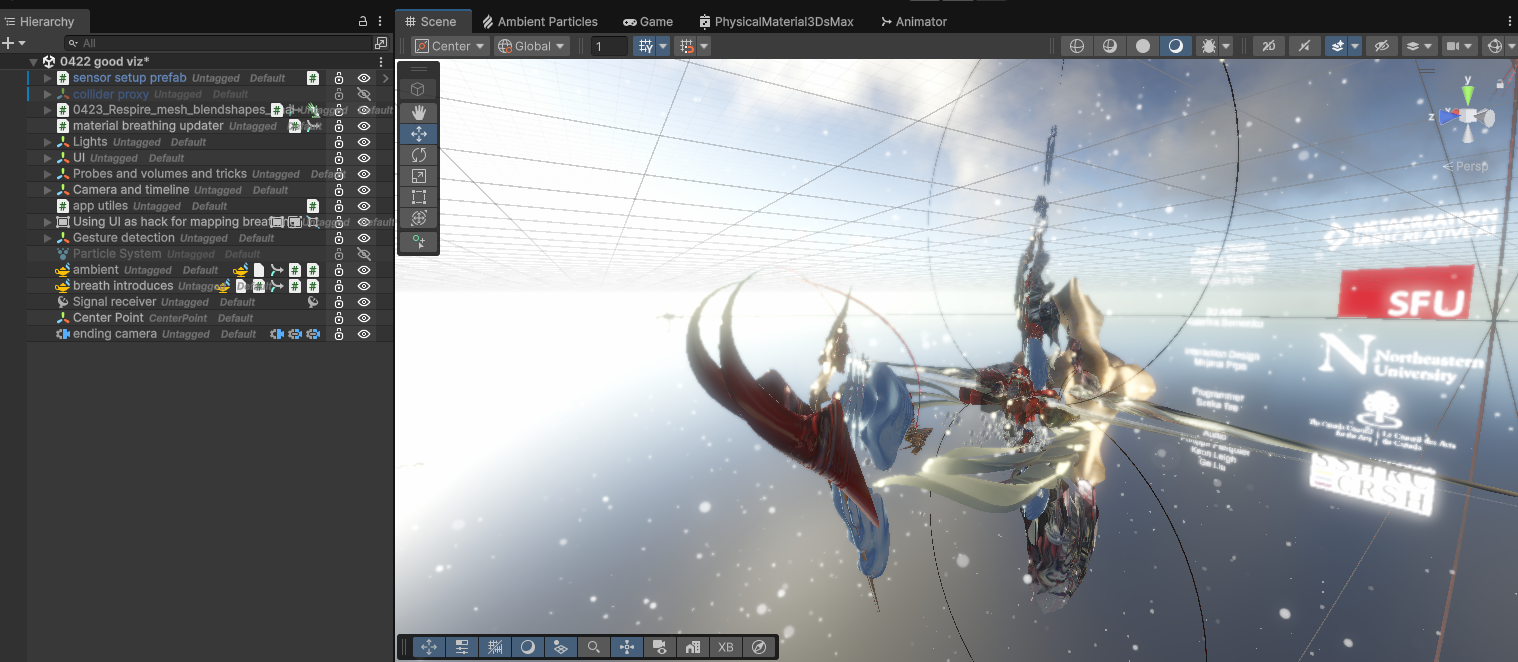
Respire 2 is an immersive interactive artwork that transforms breathing into a spatial and sensory act. The experience unfolds inside an abstract, lung-like environment—an interior landscape that responds to the participant’s presence rather than presenting itself as a static form.
Breath functions as the primary mode of navigation. As the participant inhales and exhales, the virtual space subtly draws them closer into the lung, creating a sensation of entering an internal body. The rhythm, depth, and continuity of breathing influence proximity and immersion, allowing the space to feel responsive, intimate, and alive rather than controlled or mechanical.
Sound emerges in parallel with breath, forming a living acoustic layer that expands and contracts with respiration. Rather than acting as feedback, sound behaves as a co-breathing element—shifting textures and intensities that mirror the participant’s internal rhythms and reinforce the sense of inhabiting a breathing organism.
Gestural interaction introduces an additional bodily dialogue. Lateral hand movements allow the participant to drift across the interior, exploring different regions of the lung, while a pushing gesture creates distance—an intentional movement away from the body’s interior. This interplay between breath-driven attraction and gesture-driven distancing creates a continuous negotiation between surrender and agency.
The system is designed not to instruct or optimize, but to listen—to allow breath, sound, and movement to remain open, interpretive, and felt rather than measured.
Purpose
Respire 2 investigates breath as an expressive and relational force rather than a purely physiological function. The work invites participants to experience breathing as a way of being in space—one that is intimate, vulnerable, and deeply embodied.
By situating the participant inside a responsive, lung-like environment, the piece collapses distinctions between inside and outside, observer and body, self and space. The act of breathing becomes visible and audible, not as data, but as presence. Moments of closeness and withdrawal mirror lived experiences of attention, anxiety, calm, and self-awareness.
The inclusion of gesture alongside breath introduces tension: the body is both drawn inward and capable of stepping away. This oscillation reflects the dual nature of breath itself—automatic yet conscious, involuntary yet expressive.
As an interactive artwork, Respire 2 does not seek resolution or mastery. Instead, it creates a space for reflection, where participants can sense their own breathing as something shared, fragile, and alive. The work asks not how breath can be controlled, but how it can be felt, inhabited, and gently encountered.
Credits
Artistic Directors: Philippe Pasquier, Mirjana Prpa, Katerina Semenko
3D Artist: Katerina Semenko
Interaction Design: Mirjana Prpa
Programmer: Szeka Tse
Research Assistant: Dhruv Adhia
Audio: Philippe Pasquier, Keon Leigh, Ge Liu